June 9, 2026
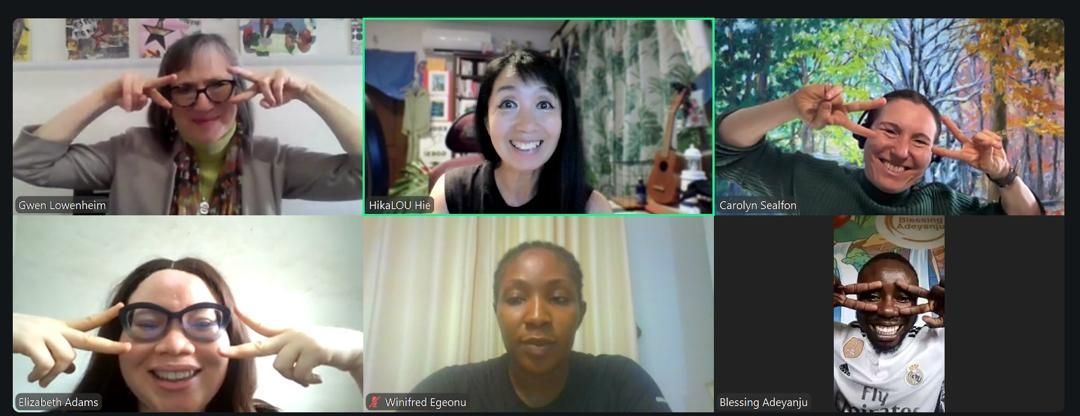
The Mental Health Ensemble is Back India has roughly 9,000 psychiatrists for a population of over a billion people — fewer than one per 100,000. Between 70 and 92% of people living with mental health conditions on the subcontinent receive no professional treatment. The gap between need and available care is not a policy failure at the margins; it is structural abandonment. People like psychologist Ishita Sanyal are creating revolutionary approaches to mental health using social therapeutic tools of play, performance, and group-building. The Turning Point Community, founded by Ishita Sanyal and working in partnership with the Global Play Brigade, is a powerful example of grassroots creativity flourishing in the face of profound institutional shortcomings. Over the past three years, their Open the Door initiative has evolved through this collaboration into a truly global developmental and cultural space. What began as a local effort now regularly brings together performers, audience members, family members, educators, artists, and community builders from multiple countries, creating new opportunities for specially abled performers in India to share their artistic work and developmental journeys with an international community. Propelled by the need to help her brother, who had been diagnosed with schizophrenia as a young adult, Ishita organized the beginnings of a community program to help him. She enlisted the support of educators and clinicians and found the East Side Institute, where she studied the performance methodologies of social therapeutics. Over 30 years of campaigning across India to demand humane treatment for thousands of profoundly mentally ill that would otherwise languish in the streets, Ishita recruited academic, research, and public health allies. I recently attended an Open the Door event. On display for an enthusiastic Zoom and in-the-room audience were supporters of people with special abilities from different parts of India who took the stage that day. The audience itself reflected the evolving partnership between Turning Point and the Global Play Brigade. Participants from around the world were not simply observing performances but helping to create an environment in which performance, appreciation, and play could become developmental activities shared across cultures and continents. We witnessed a community of transformation , built from relationship, performance, play, and the radical insistence that everyone takes the stage that they themselves have built. Here was a community of people who were struggling with profound limitations, stretching, growing, singing, dancing, being appreciated, and bathing in the fun. The room was a love fest. There is much talk in developmental and mental health circles about inclusion, i.e., making room for those who've been left out, welcoming them in. It's a generous impulse. But it rests on an architecture built by and for others . The Turning Point community far transcends that architecture. Inclusion implies a center and a margin, a normative space and those who need to be managed into it. It’s built around creativity, play, the willingness to try something difficult in front of other people, and the irreplaceable experience of being seen when you do. When professional infrastructure is absent, what communities can build through art, performance, and sustained relational work is not a stop-gap, but its own form of wellness and development. One of the things that struck me most deeply was something one of the young performers, Omkar, shared. He said that for him, coming to enjoy performance is not natural or automatic. It's something that you have to grow into as you perform with and for others. For many of the Turning Point participants with disabilities, neurodivergence, or psychiatric diagnoses, performing in front of others is risky and bold. Omkar said, "We as performers," says Omkar, "can come to enjoy that we did it! We can appreciate our hard work and effort. But it’s not natural. It’s foreign; it’s not me.” Dr. Samip Sinchuri of Jadavpur University observed that the participants were performing a profound emotional and relational act — one in which the effort of every person on stage was appreciated. The community collectively appreciated in their laughter, shouts of affirmation, applause, and smiles of loving enjoyment. Enjoyment is development. It’s a developmental and relational achievement. The enjoyment is something experienced through the relationship with other performers, with oneself, and with the audience. And we, the audience (who were clearly enjoying ourselves !), were participants in the performers' capacity to enjoy themselves . The environment that was created was not judgmental or critical, but appreciative and collaborative. Turning Point’s deeply moving “zone of development” confronts us with assumptions most of us bring into the room; who counts as a performer? Who has the right to occupy a stage? Those assumptions are built upon a system of comparison and judgments. Judgments about performers with dyslexia? Maybe, but not left unchallenged. Matthew, performing from Nigeria, chanted and danced defiantly, "I write differently, but I think BOLD!" The stigmas never go away… But together, participants and audience members performed other than stigma. That doesn’t mean that the stigmas go away. Nobody at Open the Door was pretending that the world outside is kind, or that disability and difference are easily metabolized by a society that prefers its people legible and efficient. But together GPB participants and audience members, performers and appreciators performed other than stigma . Dr. Sinchuri noted that pretense and play make falling flat less catastrophic, and thus make performing for others within reach. The stakes are real but minimal. You can try, fall short, and try again. The magic, he said, is not in winning medals. It's in the activity of stepping out of saying "let me try." This spirit is also evident in GPB workshops such as Heart and Power , developed in partnership with Ishita Sanyal, in which participants explore the relationship between play, performance, and collective development. Rita Ezenwa Okoro, Executive Director Emeritus of the GPB, spoke to the way this work radiates outward. Turning Point isn't just performing for itself. It's demonstrating, publicly and joyfully, that a pro-health, pro-development, fully inclusive, cultural and artistic approach to mental health is not only possible– but alive and thriving in their community.