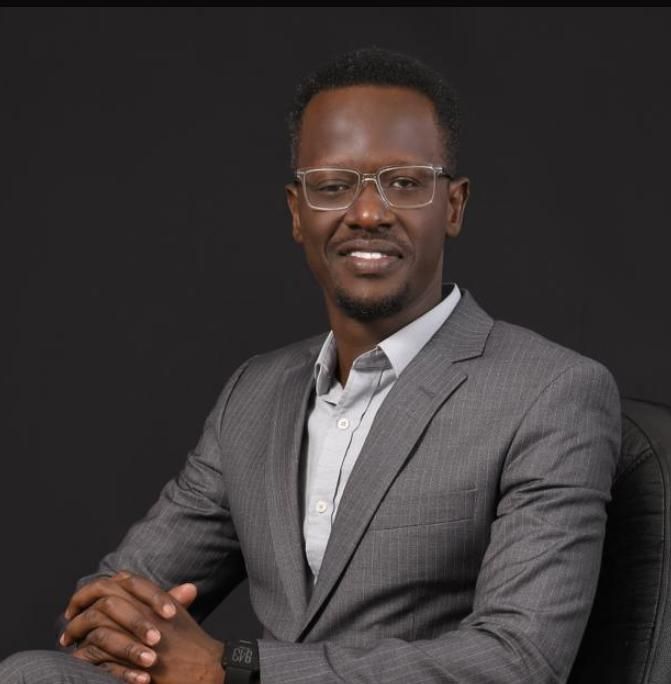
Lambert Oigara on his Discovery of the Magic of Art in Psychology
GPB Africa leader, Lambert Oigara, on his Discovery of the Magic of Art in Psychology
Hear ye, hear ye! GPB has its very first GPB Correspondent. That’s right (snap!). She is Godsdelight Agu, a writer, storyteller, and mental health advocate from Lagos, Nigeria. She has been on a quest to get to know more about our Global Play Brigadiers. Her discoveries? The genius, heartfelt, and artful stories of Brigadier Lambert Oigara (Kenya). The interview has been edited for length and clarity.
Lambert never planned to be a psychologist. As a boy, he simply wanted to follow in the footsteps of his uncle, a celebrated artist who travelled the world. He described his uncle with a softness that only comes from deep admiration. But then, almost in a whisper, he told me his uncle died by suicide.
That loss didn’t just shape him. It rerouted his entire life.
In the middle of grief, he found himself flipping through his mother’s textbooks when she was studying HIV counselling. He wasn’t looking for answers, just comfort. In that “flipping the pages”, he noticed something that tugged at him: Why were there drawings in books about mental health? Could art really heal? That small curiosity became the beginning of everything.
When Lambert discovered Art Therapy, it was like the missing piece of his world clicked into place. Art and psychology didn’t have to live apart. They could meet, merge, and give people what words sometimes couldn’t.
Fresh out of high school, he was invited to work in a psychiatric unit as an Art Facilitator, long before he had any professional training. That first opportunity set him on a path that has now stretched over twenty years. As he spoke about hustling through part-time classes at the University of Nairobi in Kenya while working three days a week in the psychiatric unit, I could hear both pride and gratitude. He didn’t wait for perfect conditions. He built his career while helping people heal. Then came his Master’s in Clinical Psychology at USIU-Africa, another step toward combining science with the creative heart he never lost.
Today, Lambert’s approach to therapy feels like a blend of everything he has lived - expressive arts, movement, play, and clinical psychology. He doesn’t treat people from a distance; he meets them where they are, with colour, rhythm, and curiosity. He told me about working with clients navigating anxiety, depression, and schizoaffective disorders. The way he described them was filled with respect, not labels. “People bloom when they feel safe,” he said, and in his hands, therapy becomes a space for blooming.
This belief came even more alive for Lambert during the recent Heart and Power Playshop, where he co-facilitated a GPB session for the first time, “What is Wellness?” Listening to him describe that experience, it was clear the playshop wasn’t just an event. It was a reminder:
“Wellness isn’t a destination. It’s a reflection. It’s enrichment. It’s the courage to be vulnerable in front of people who hold you kindly.”
Lambert carries this philosophy into CBT Kenya, the private practice he built, and into his work with GPB Africa and the Mental Health Ensemble. He sees play not as a technique but as a way of life, especially for people working in mental health. Before we ended our conversation, he left me with a sentence that stayed with me long after: “Play is important in mental health because it makes us whole.”
And hearing his story, from childhood dreams to deep loss, from art to healing, I understood exactly what he meant.